Radon is a colorless, odorless radioactive gas that rises from soil and builds up inside homes, where long-term exposure is the leading cause of lung cancer among non-smokers. These radon FAQs answer the questions homeowners ask most — about symptoms, safe levels, testing, and what to do if your home tests high.
The short version: radon produces no symptoms you can feel, the only way to detect it is a test, and elevated levels can be fixed with a mitigation system. Below, the radon pros at North American Radon Pros break down the details.
Key Takeaways
- Radon has no symptoms. There are no immediate signs of exposure — testing is the only way to know your levels.
- 4.0 pCi/L is the EPA action level. At or above this reading, mitigation is recommended.
- Radon causes about 21,000 lung cancer deaths a year in the U.S. — the leading cause among non-smokers.
- Testing is simple and cheap. Short-term kits take a few days; long-term tests run 90+ days.
- High radon is fixable. A mitigation system reduces levels by 80–99% in most homes.
Radon Symptoms FAQs
What are the symptoms of radon exposure?
There are none. There are no immediate symptoms from radon exposure, and it has no irritating effects or warning signs. You won’t cough, get headaches, or feel sick from breathing it. This is exactly what makes radon dangerous — the damage happens silently over years.
Can I tell if I’m being exposed to radon?
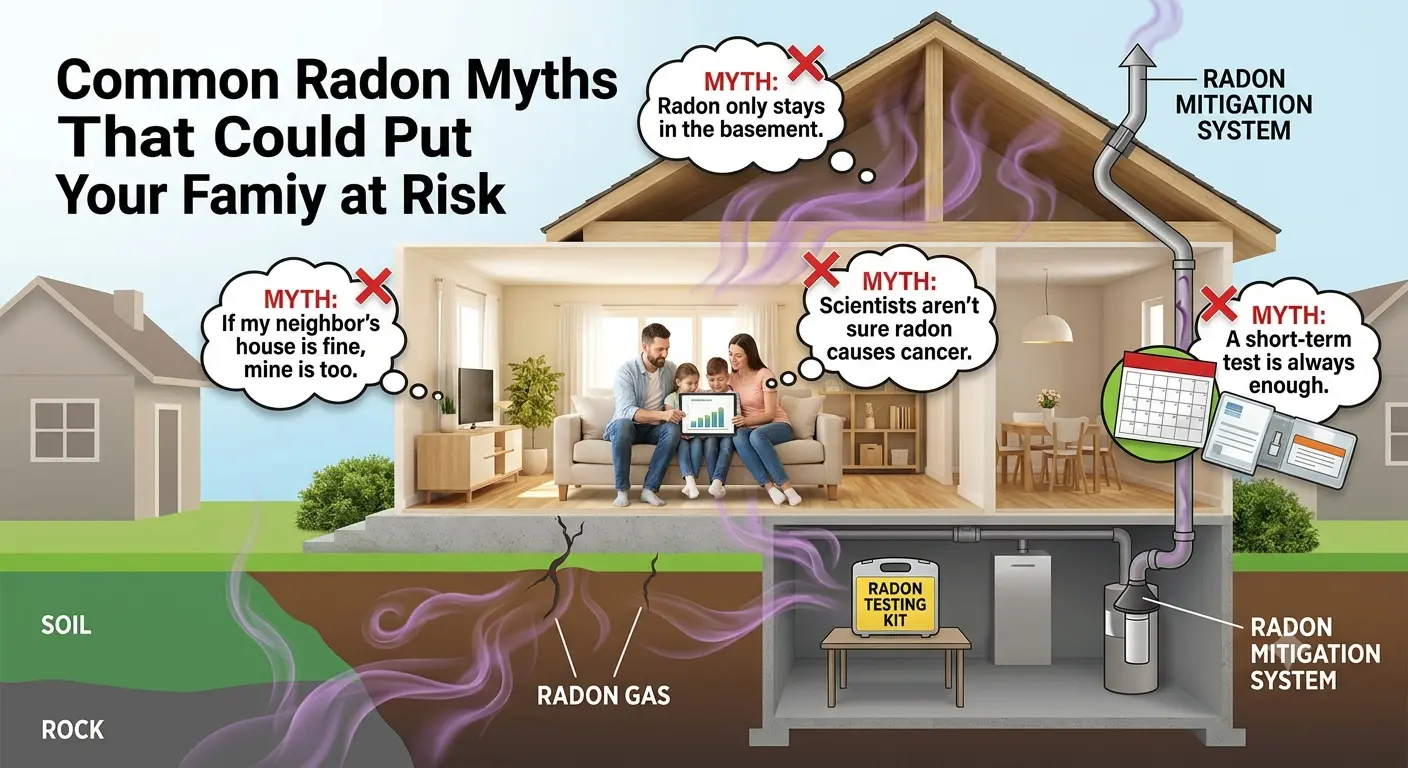
No. There are no immediate symptoms of exposure — you don’t start coughing when you’re exposed to radon. The gas is tasteless, odorless, and invisible. Testing is the only way to know whether radon is present in your home.
What health problems does radon actually cause?
Lung cancer. Lung cancer is the only health effect that has been definitively linked with radon exposure, and it usually occurs 5 to 25 years after exposure. There is no evidence that other respiratory diseases such as asthma are caused by radon.
The symptoms people eventually notice are the symptoms of lung cancer itself — cough, coughing up bloody mucus, unexplained weight loss, chest pain, or shortness of breath — which is why early detection through testing matters so much.
Are children at greater risk from radon?
There is no evidence that children are at any greater risk of radon-induced lung cancer than adults. That said, anyone spending significant time in a home with elevated radon faces cumulative risk, so reducing levels protects the whole household.
Radon Levels FAQs
What is a safe radon level?
There is no completely safe level, but the EPA action level is 4.0 pCi/L. At or above this reading, mitigation is recommended. For context, average outdoor air contains about 0.4 pCi/L, and the average indoor level is around 1.3 pCi/L.
| Radon Level (pCi/L) | What It Means | Action |
|---|---|---|
| Below 2.0 | Low | No action; retest every 2–5 years |
| 2.0–3.9 | Gray zone | Consider fixing, especially after a long-term test |
| 4.0 and above | EPA action level | Mitigate |
Why is 4.0 pCi/L the action level?
The EPA set 4.0 pCi/L by weighing the health risk against what mitigation can realistically achieve, since reducing indoor radon much below outdoor background levels is difficult. The agency is explicit that no level of radon is risk-free — 4.0 pCi/L is the point to act, not the point at which safety begins.
Is there a stricter standard than the EPA’s?
Yes. The World Health Organization recommends a reference level of 2.7 pCi/L where achievable. Many radon professionals treat anything in the 2.0–4.0 range as worth addressing, especially for non-smokers and homes with young children.
How risky is a reading of 4.0 pCi/L?
At 4.0 pCi/L, a non-smoker has roughly a 7 in 1,000 lifetime lung cancer risk. For a smoker, that jumps to about 62 in 1,000. The risk is cumulative, so a chronic average matters more than any single reading.
Radon Testing FAQs
How do I test my home for radon?
You can use a DIY test kit or hire us (North American Radon Pros). Do-it-yourself test kits are simple to use and inexpensive, and you can also work with a professional to test your home. There are two main types: short-term and long-term.
What’s the difference between short-term and long-term tests?
| Feature | Short-Term Test | Long-Term Test |
|---|---|---|
| Duration | 2–7 days | 90+ days |
| Best for | Real estate, fast results | True annual average |
| Accuracy | Snapshot only | Reflects seasonal change |
| EPA confirmation | Often needs follow-up | More reliable on its own |
A short-term test gives a quick reading. A long-term test reflects how radon shifts across seasons, which makes it the more accurate measure of real exposure.
How often should I test?
Test every home at least once, then retest every two to five years. Levels change as soil settles, foundations shift, and homes are sealed differently season to season. Always retest after finishing a basement or making major structural changes.
Does radon affect every home?
Yes, potentially. Radon comes from rock and soil, so it can be found anywhere, and high amounts have been found in homes in every state. Nearly one in 15 U.S. homes has radon above the action level.
What to Do Next FAQs
What should I do if my radon test comes back high?
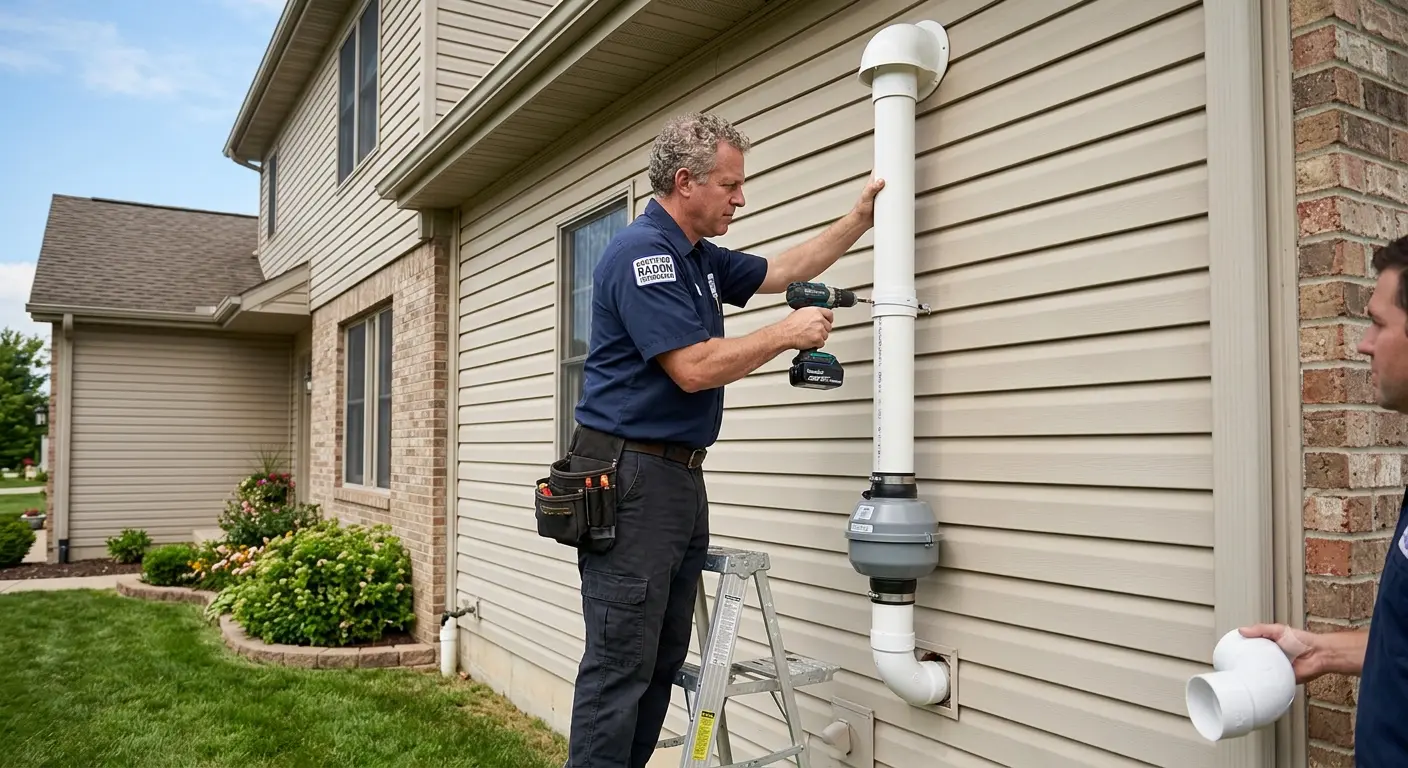
If your confirmed reading is at or above 4.0 pCi/L, install a mitigation system. Most systems reduce radon levels by 80 to 99 percent, often bringing homes below 2.0 pCi/L. A certified professional assesses your foundation, designs the system, installs it, and re-tests to confirm the drop.
How does radon mitigation work?
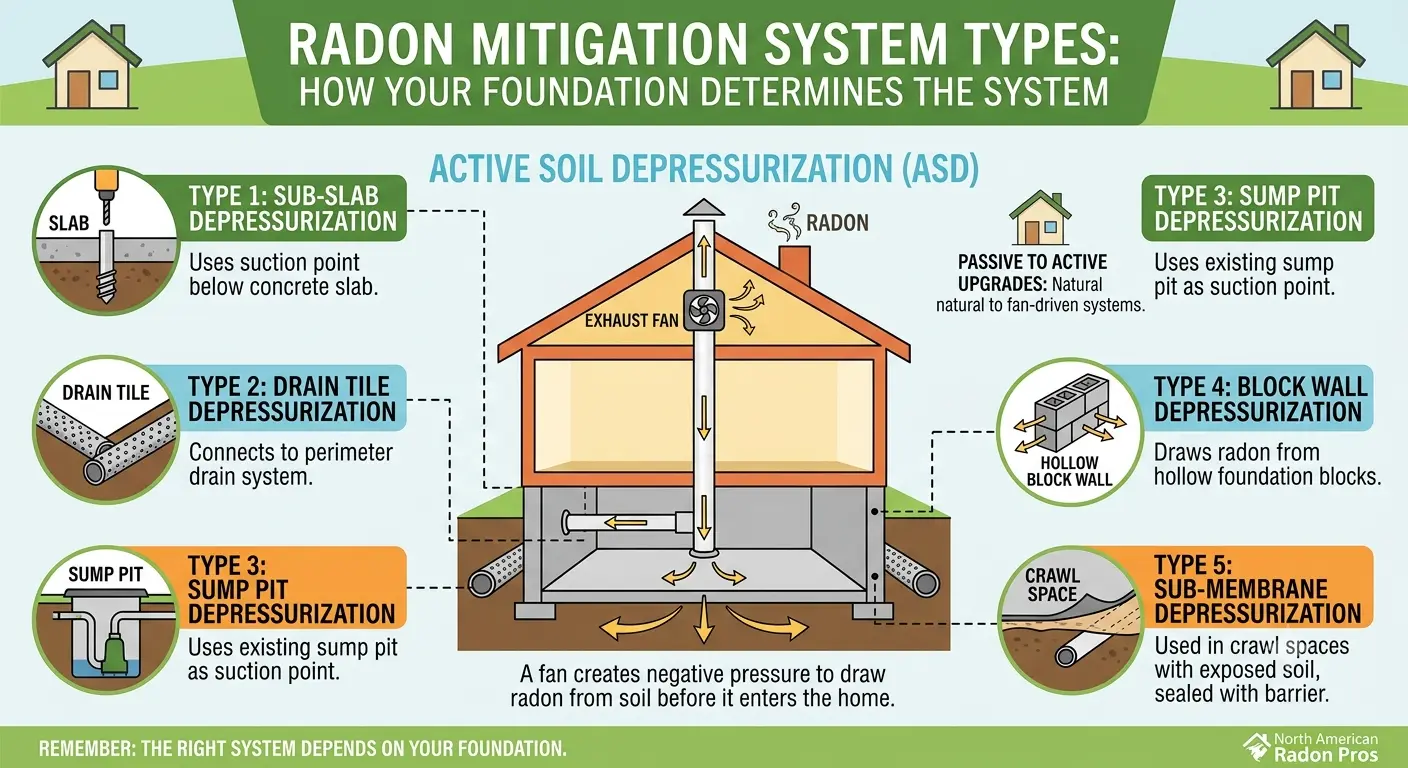
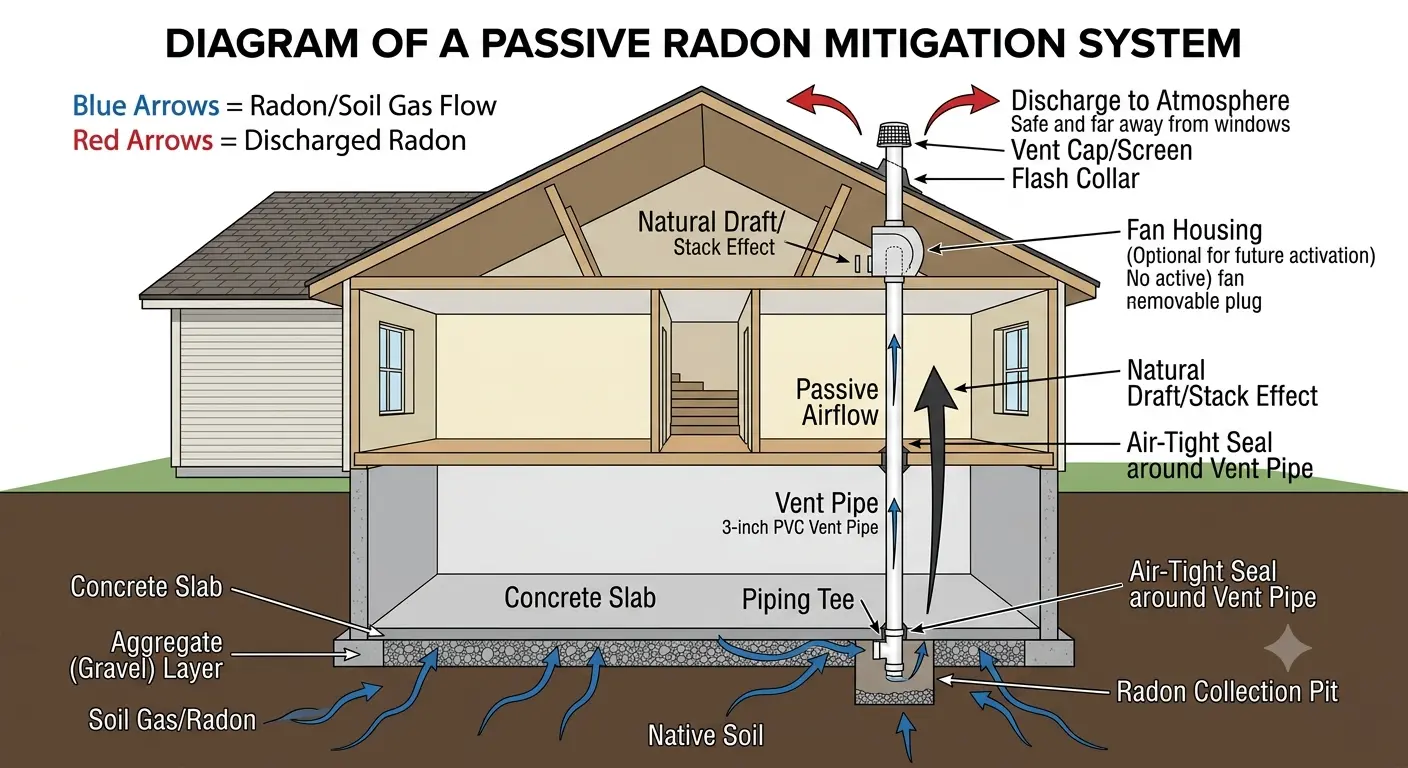
The most common method is sub-slab depressurization: a fan draws radon from beneath the foundation and vents it safely above the roofline before it can enter your living space. Most systems are installed in a single day. Mitigation effectively lowers radon to acceptable levels.
Will fixing radon help if I’m selling my home?
Yes. Radon is a standard item in many real estate transactions, and a documented system in place is a clear selling point that keeps deals on track.
Who should I call about high radon?
A certified radon mitigation professional. The radon pros at North American Radon Pros assess your home, install a clean, code-compliant system, and confirm the results with a follow-up test — no fear-selling, just straight answers.