A passive radon system is a radon mitigation setup installed during construction that uses a home’s natural airflow — not a fan — to draw radon from beneath the foundation and vent it above the roofline. It relies on natural pressure differences and convection, making it a cost-effective initial approach built into the home’s structure.
Here’s the critical part most homeowners miss: a passive system is a starting point, not a guarantee. It often fails to bring radon below safe levels on its own. Below, the radon pros at North American Radon Pros explain how passive systems work, where they fall short, and what to do about it.
Key Takeaways
- A passive radon system uses natural airflow, not a fan, to move radon out of a home.
- They’re installed during construction as part of radon-resistant new construction (RRNC).
- Passive systems are only about 50–57% effective — far less reliable than active systems.
- A passive system can be activated by adding a fan if testing shows high radon.
- A passive system is not proof your home is safe. You still need to test.
How Does a Passive Radon System Work?
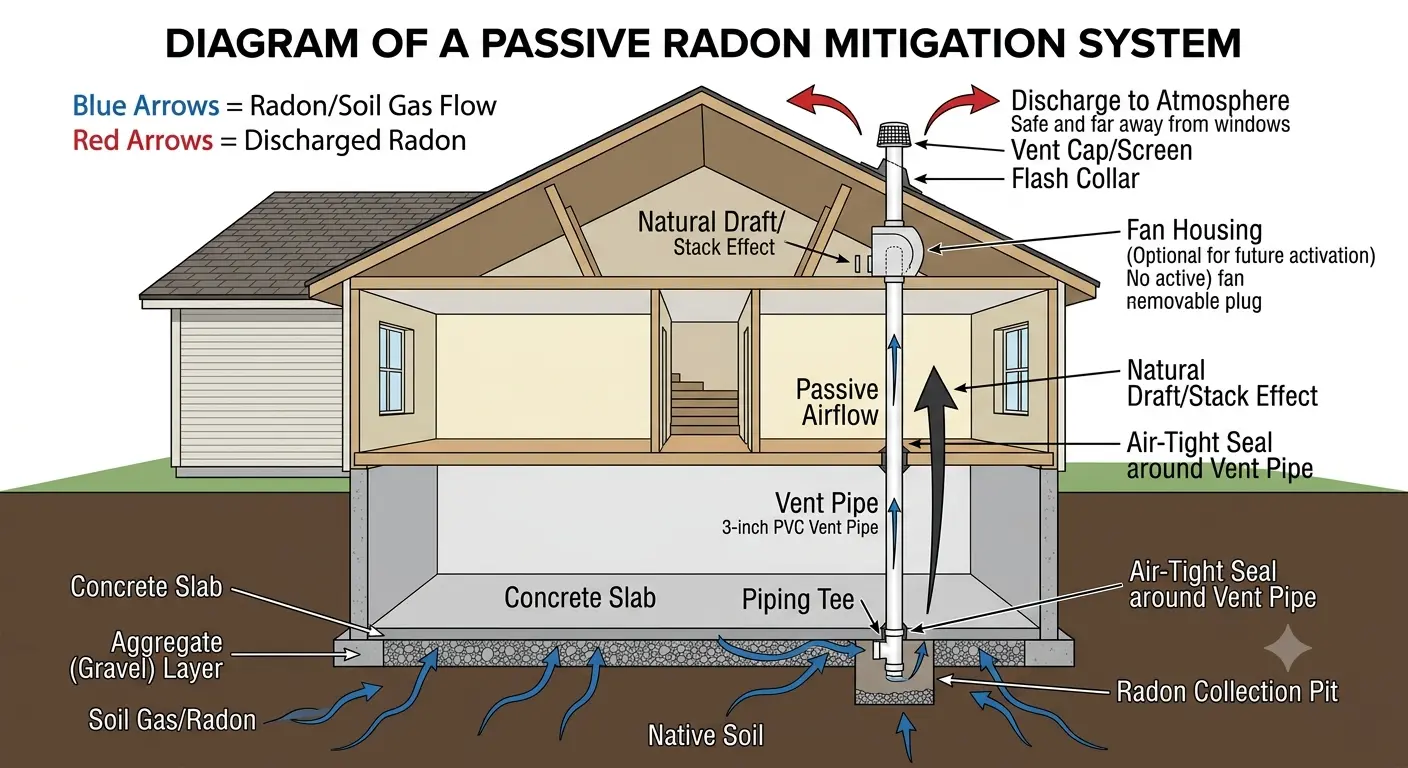
A passive radon system works on the “stack effect” — warm air rising through a home creates a natural draft that pulls radon up through a vent pipe and out above the roof. Warm air naturally rises through the home, theoretically carrying radon gas up through the pipe from the gravel pit below and discharging it above the roofline.
What’s in a Passive System
A passive system includes a gas-permeable layer beneath the slab, sealed foundation penetrations, and a passive vent pipe. No fan, no electricity — just the home’s natural airflow doing the work.
Where It’s Installed
Passive systems are part of radon-resistant new construction (RRNC). RRNC requires foundation features that prevent radon entry plus a piping system that collects soil gases and vents them above the roofline. It’s far easier and cheaper to build this in than to retrofit later.
Passive vs. Active Radon Systems: What’s the Difference?
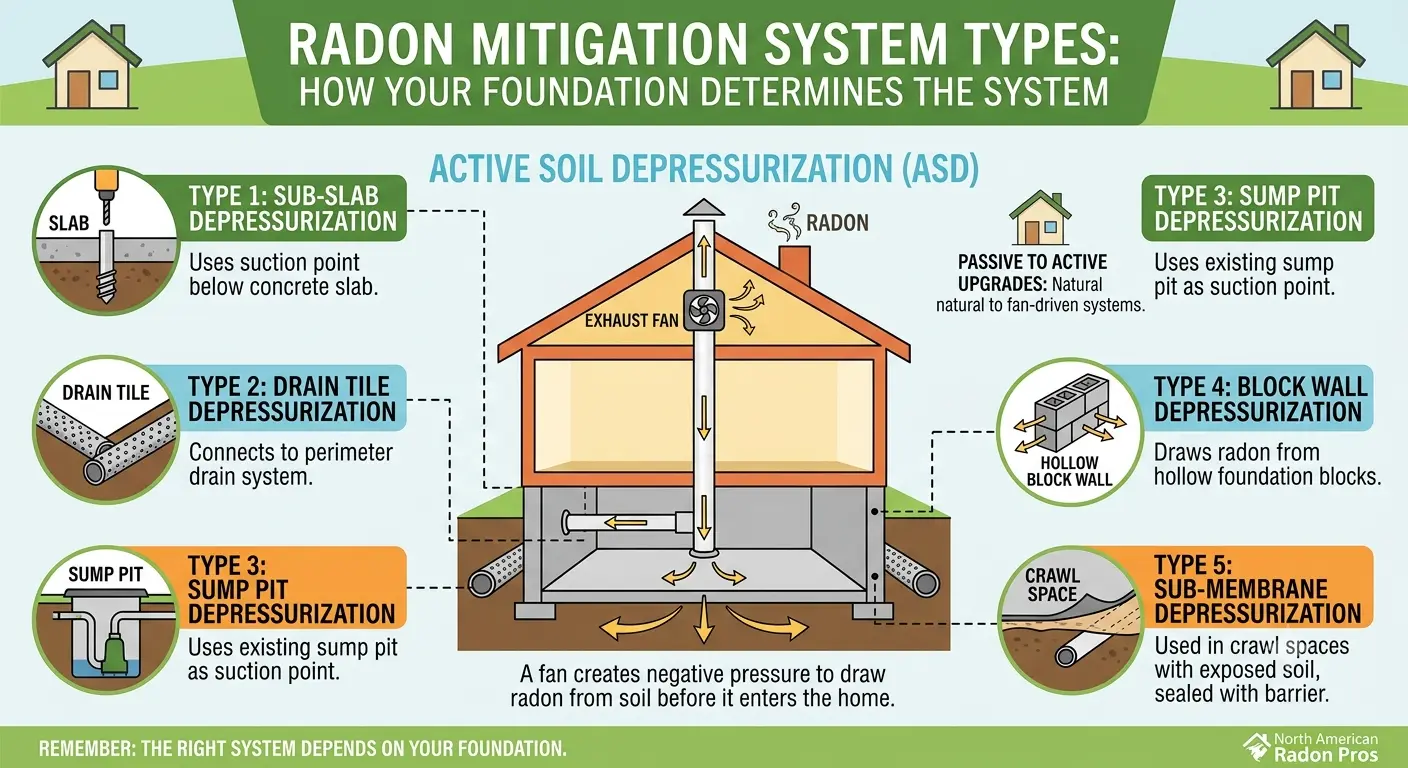
The only mechanical difference is a fan. An active system takes the passive foundation and adds an in-line fan that creates a continuous, strong vacuum beneath the slab. That single addition changes everything about reliability and performance.
| Feature | Passive System | Active System |
| Fan | No | Yes (runs 24/7) |
| Power needed | None | Continuous |
| Effectiveness | ~50–57% | 80–99% |
| Reliability | Weather-dependent | Consistent |
| Installed | During construction | New or retrofit |
| Brings home below 4.0 pCi/L | Often not on its own | Yes, reliably |
Active systems are highly reliable and regularly reduce indoor radon by 80–99%, pulling readings down to 1.5 pCi/L or lower.
How Effective Are Passive Radon Systems?
Passive systems offer partial protection at best. When properly installed, a passive RRNC system is thought to reduce indoor radon by an average of 50%. Other industry data puts the figure around 57%.
That may not be enough. The EPA strongly advises that passive systems frequently fail to drop levels below 4.0 pCi/L in highly concentrated areas, particularly during winter when stack drafts shift.
The “No Guarantee” Problem
Unlike an active system designed to achieve a specific level of depressurization, a passive system offers no guarantee it will reduce radon to acceptable levels below the EPA action level of 4.0 pCi/L. A passive system reduces risk — it doesn’t eliminate it.
The False Sense of Security Trap
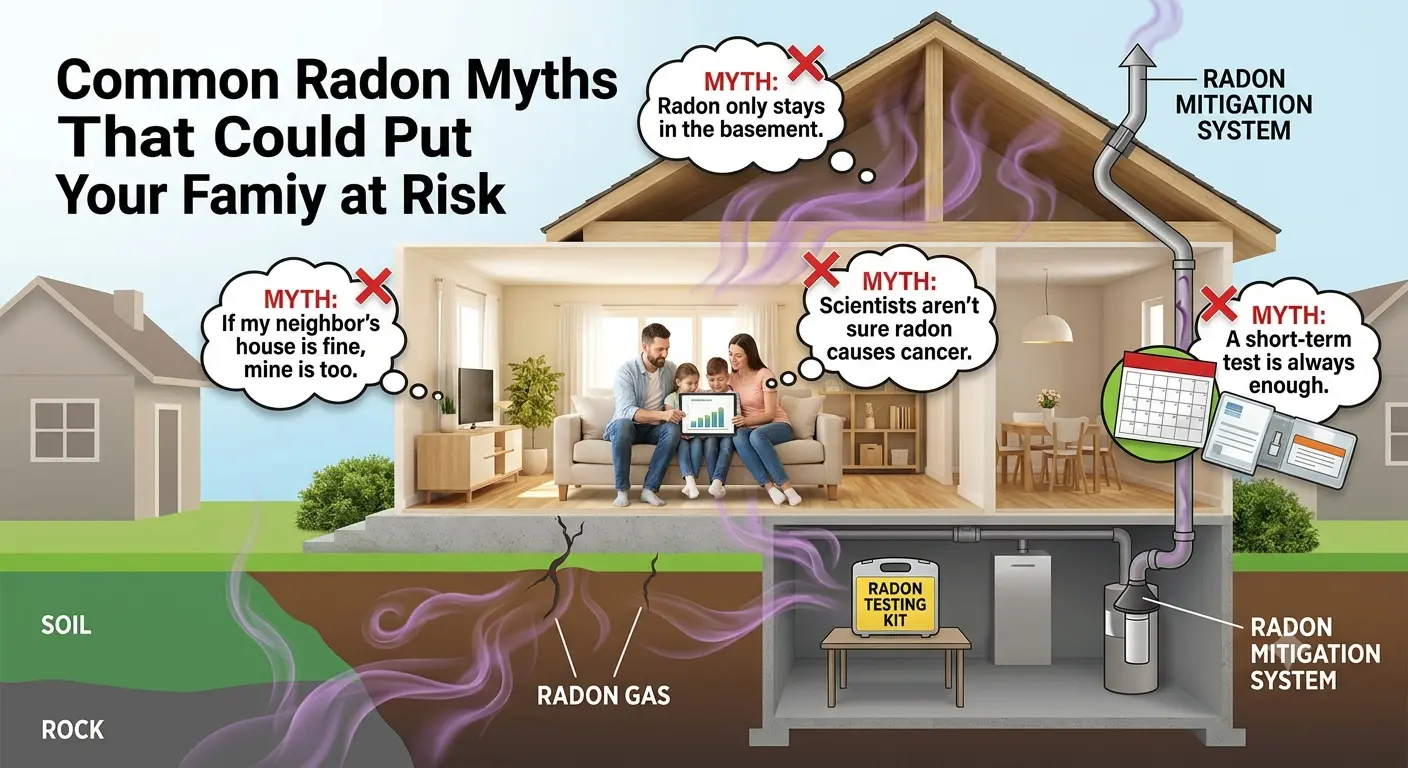
This is the most important point in this article. Many homeowners are told their new home “has a radon system” and assume they’re protected. They aren’t necessarily.
Many homeowners are informed their newly built home comes equipped with a radon system, leading them to believe they’re protected — creating a false sense of security where they may not even test for radon.
Worse, installation quality varies. Technicians activating passive systems have found incorrect PVC pipe sizes, unsealed cracks, and improper pipe routes — issues that can leave homeowners at risk despite having a labeled “radon system.” A brand-new pipe doesn’t mean it’s effectively reducing radon levels.
Can a Passive Radon System Be Made Active?
Yes — and this is one of the smartest features of modern construction. A passive system can be upgraded to active by installing an electric fan to increase radon removal.
How Activation Works
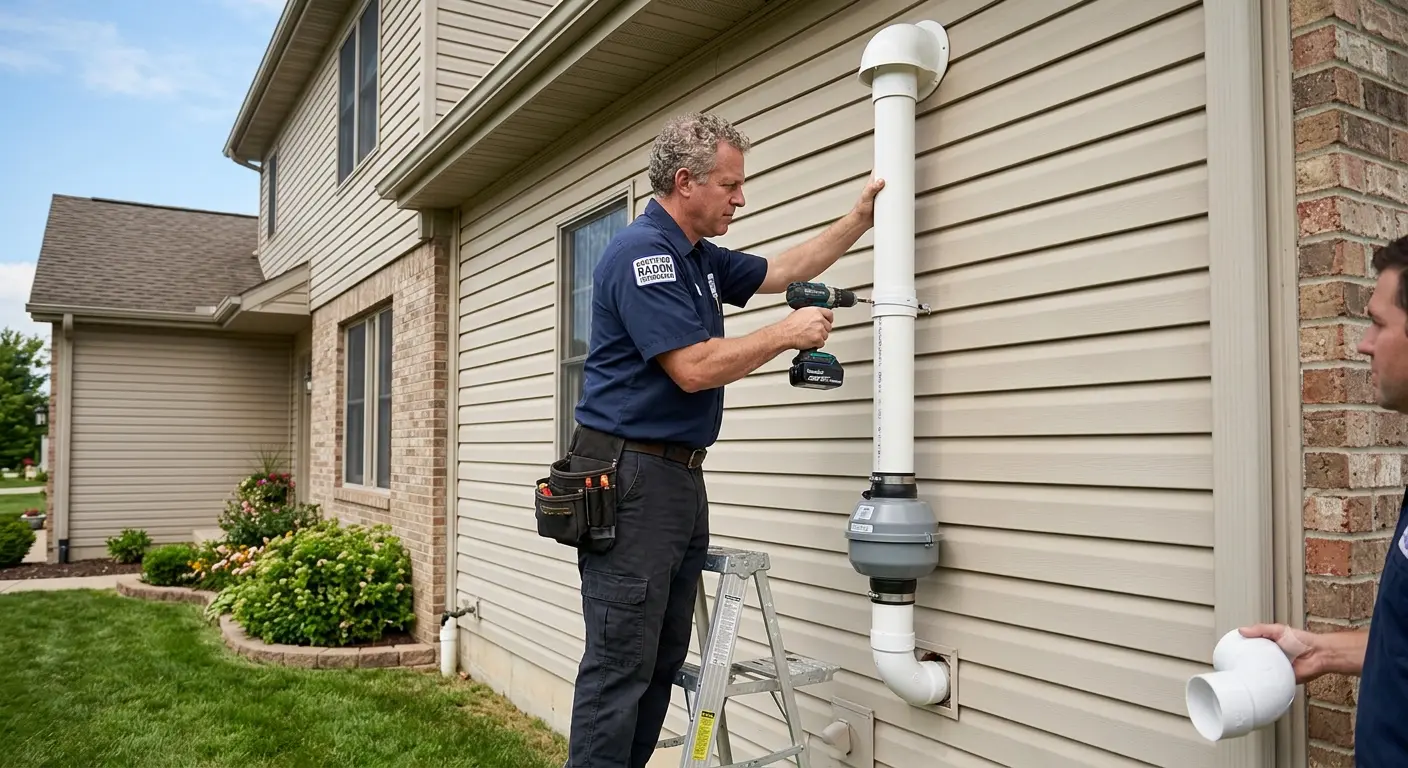
Many RRNC builds include an electrical junction box in the attic near the vent pipe, since it’s easier and cheaper to install wiring during construction. If a post-construction test comes back high, a certified technician adds a contractor-grade radon fan to the existing pipe. The fan then runs continuously, 24 hours a day, 365 days a year.
Activation is usually fast and far cheaper than a full retrofit, since the piping is already in place.
What Every Passive System Owner Should Do
If your home has a passive radon system, take these three steps:
- Test your home. A passive system is no substitute for an actual radon reading. Test in the lowest livable part of the house after construction.
- Have the system inspected. Confirm the piping was installed correctly — proper sizing, sealing, and routing.
- Activate if needed. If your reading is at or above 4.0 pCi/L, add a fan to convert the system to active.
The radon pros at North American Radon Pros inspect passive systems, test your levels, and handle activation cleanly when it’s needed. Get a Free Radon Mitigation Quote
FAQ
Is a passive radon system enough to protect my home? Often not. Passive systems reduce radon by roughly 50% on average and may not bring levels below the EPA action level. Testing is the only way to confirm whether yours is doing the job.
My new home has a radon pipe — am I protected? Not necessarily. Having a pipe doesn’t guarantee it was installed correctly or that it’s reducing radon to safe levels. Test your home to be sure.
How do I turn a passive system into an active one? A certified technician installs a radon fan on the existing vent pipe. Many homes already have wiring in place for this, which makes activation quick and affordable.
Why are passive systems less effective than active ones? They rely on natural airflow, which weakens in certain weather and seasons. An active fan creates constant suction, so it reduces radon reliably regardless of conditions.When should I test a passive system? Right after construction and move-in, then every two to five years. Test again any time you notice changes in the home or system.