The main types of radon mitigation systems are sub-slab depressurization, drain tile depressurization, sump pit depressurization, block wall depressurization, and sub-membrane depressurization. Most operate on the same principle: a fan creates negative pressure beneath the home and vents radon outside before it can enter your living space.
Which system fits your home comes down to one thing — your foundation. If you’re considering a radon mitigation system but are unsure what makes your home different, it’s all about the foundation. Below, the radon pros at North American Radon Pros break down each type.
Key Takeaways
- Most systems use active soil depressurization (ASD) — a fan pulls radon from beneath the home and vents it outside.
- The four core types: sub-slab, drain tile, sump pit, and block wall depressurization.
- Crawl space homes use sub-membrane depressurization with a sealed vapor barrier.
- Sub-slab depressurization is the gold standard — the most common and reliable method.
- The right system depends on your foundation — there’s no one-size-fits-all.
How Most Radon Systems Work: Active Soil Depressurization
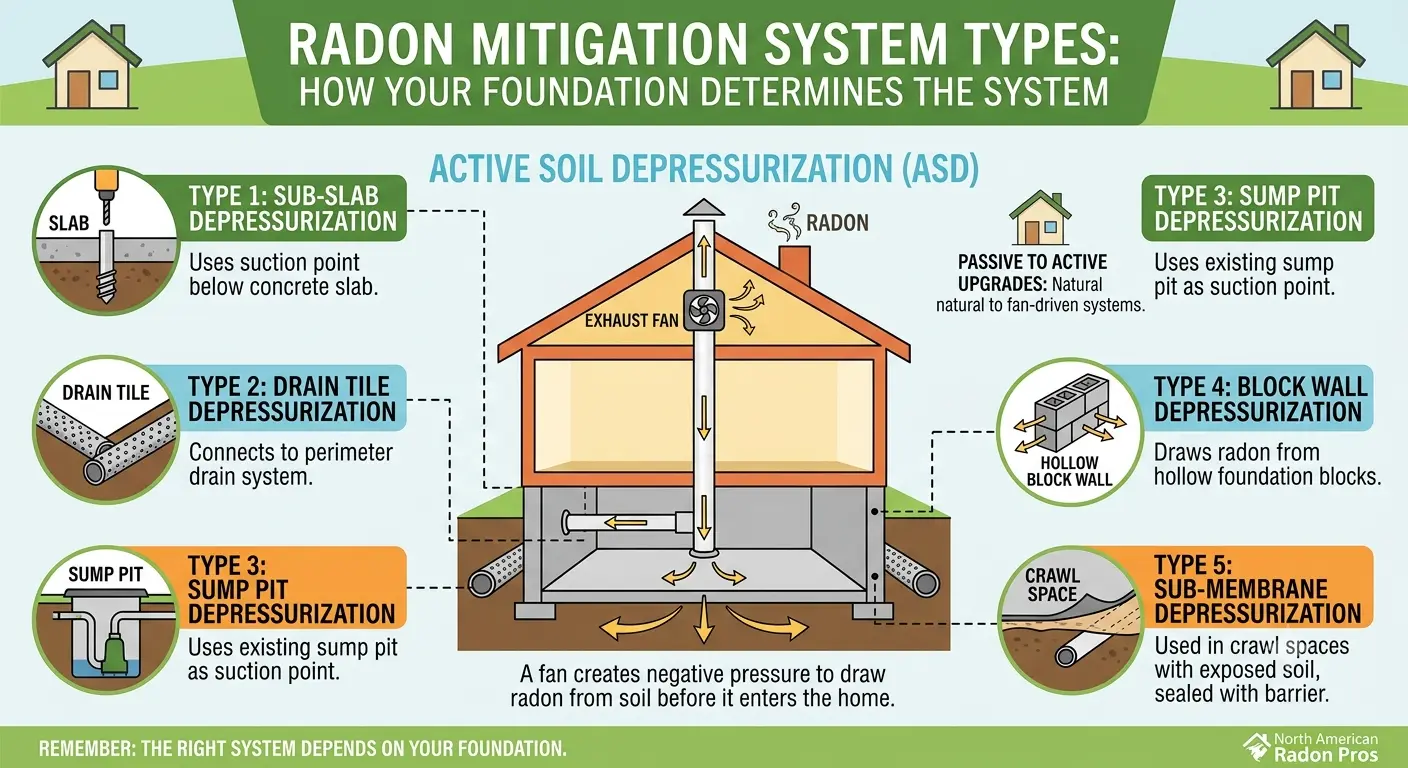
Active soil depressurization (ASD) is the foundation of nearly every modern radon system. It works by creating a negative pressure field beneath the home, then using a fan to draw radon-laden soil gas out and exhaust it outside.
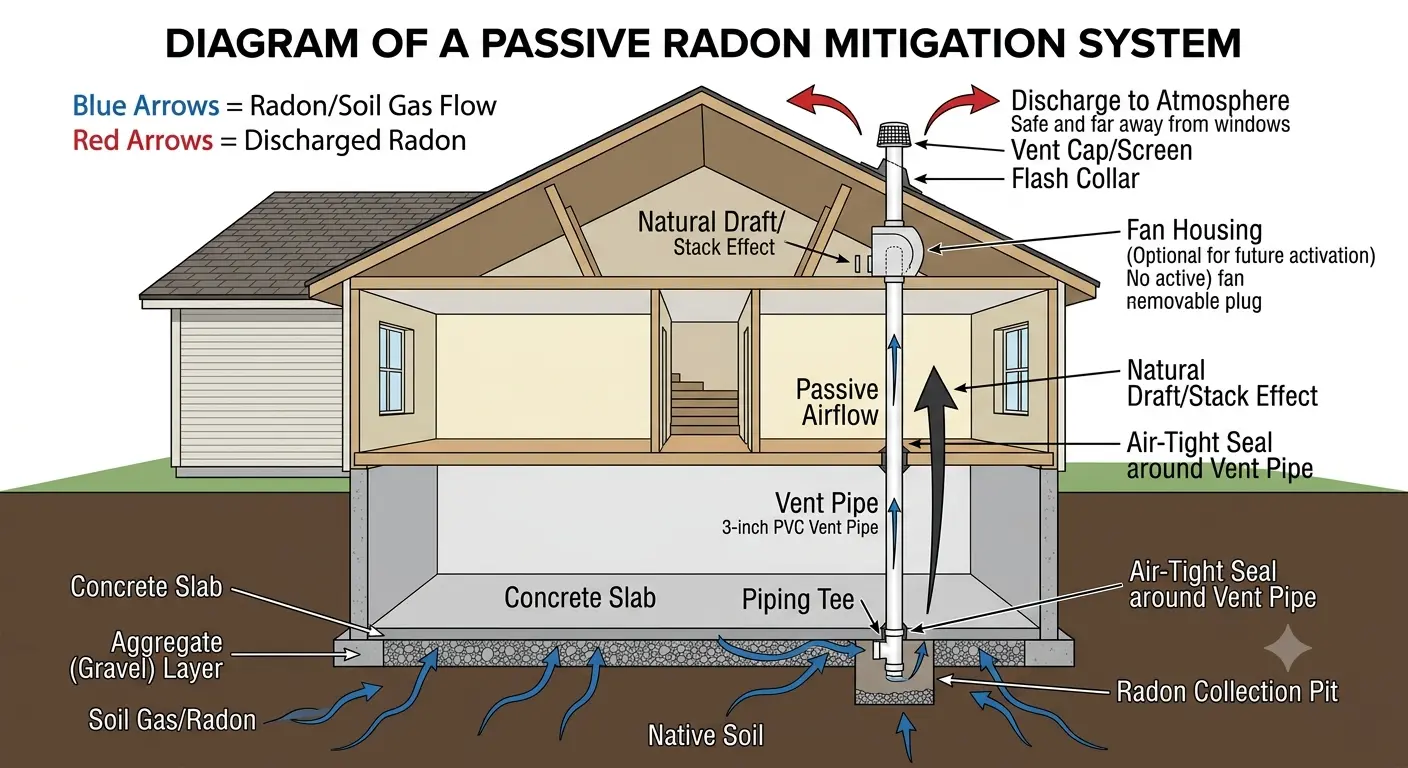
The four types of active soil depressurization are sub-slab, drain tile, sump (pit), and block wall depressurization. Crawl space homes add a fifth method — sub-membrane depressurization. There’s also a passive version that relies on natural airflow instead of a fan, though it’s far less effective.
Type 1: Sub-Slab Depressurization (SSD)
Sub-slab depressurization is the most common and reliable radon mitigation method. A radon fan creates negative pressure beneath the basement slab, drawing radon gas out before it can enter your home. It’s widely considered the gold standard.
How It Works
One or more suction pipes are inserted through the floor slab into the crushed rock or soil underneath, and a radon vent fan draws the gas from below the house and releases it outdoors. Usually only a single suction point is needed.
Best For
Homes with a basement or slab-on-grade foundation and a poured concrete floor.
Type 2: Drain Tile Depressurization
If your home has perimeter drain tile, this method puts existing infrastructure to work. By connecting the drain tile to a vent pipe and fan, the system draws radon-laden soil gas from the entire perimeter of the foundation, creating a broad depressurization field.
Best For
Especially effective when the drain tile forms a continuous loop around the building. Common in homes built after the 1970s.
Type 3: Sump Pit Depressurization
For homes with an existing sump pit, the pit becomes the suction point. The sump is capped so it can continue to drain water, but now it also lowers radon levels.
This approach is efficient and unobtrusive. Rather than drilling a new hole as you would in a sub-slab system, it uses your existing sump pump setup.
Best For
Basements with a sump pump, ideally connected to drain tile.
Type 4: Block Wall Depressurization
Older homes with hollow concrete block foundations face a unique problem — radon collects inside the block cavities. Block wall suction draws negative pressure directly through the hollow cores, pulling radon out before it seeps through mortar joints into the living space.
It’s often used in combination with sub-slab suction.
Best For
Homes with hollow block foundation walls acting as a radon entry pathway.
Type 5: Sub-Membrane Depressurization (Crawl Spaces)
Crawl spaces with exposed soil need a different strategy. The crawl space floor is covered with a durable, airtight vapor barrier sealed to the foundation walls and piers, then a vent pipe and fan draw air from beneath the barrier and exhaust it outside.
Best For
Homes with accessible crawl spaces and exposed dirt floors.
Type 6: Passive-to-Active Upgrades
Many newer homes are built with a passive radon pipe but no fan. Passive sub-slab venting relies on natural pressure differentials, and you can easily add a fan if necessary. Activating a dormant passive system is often the fastest, lowest-cost path to safe levels.
Best For
Newer homes with an unfinished passive radon pipe already in place.
Comparison: Radon System Types by Foundation
| Foundation Type | Recommended System | How Common |
| Poured concrete slab | Sub-Slab Depressurization | Very common |
| Slab with drain tiles | Drain Tile Depressurization | Common (post-1970s) |
| Basement with sump | Sump Pit Depressurization | Very common |
| Hollow block walls | Block Wall Depressurization | Less common |
| Crawl space | Sub-Membrane Depressurization | Common |
| Newer home with passive pipe | Passive-to-Active Upgrade | Growing |
A Note on System Venting
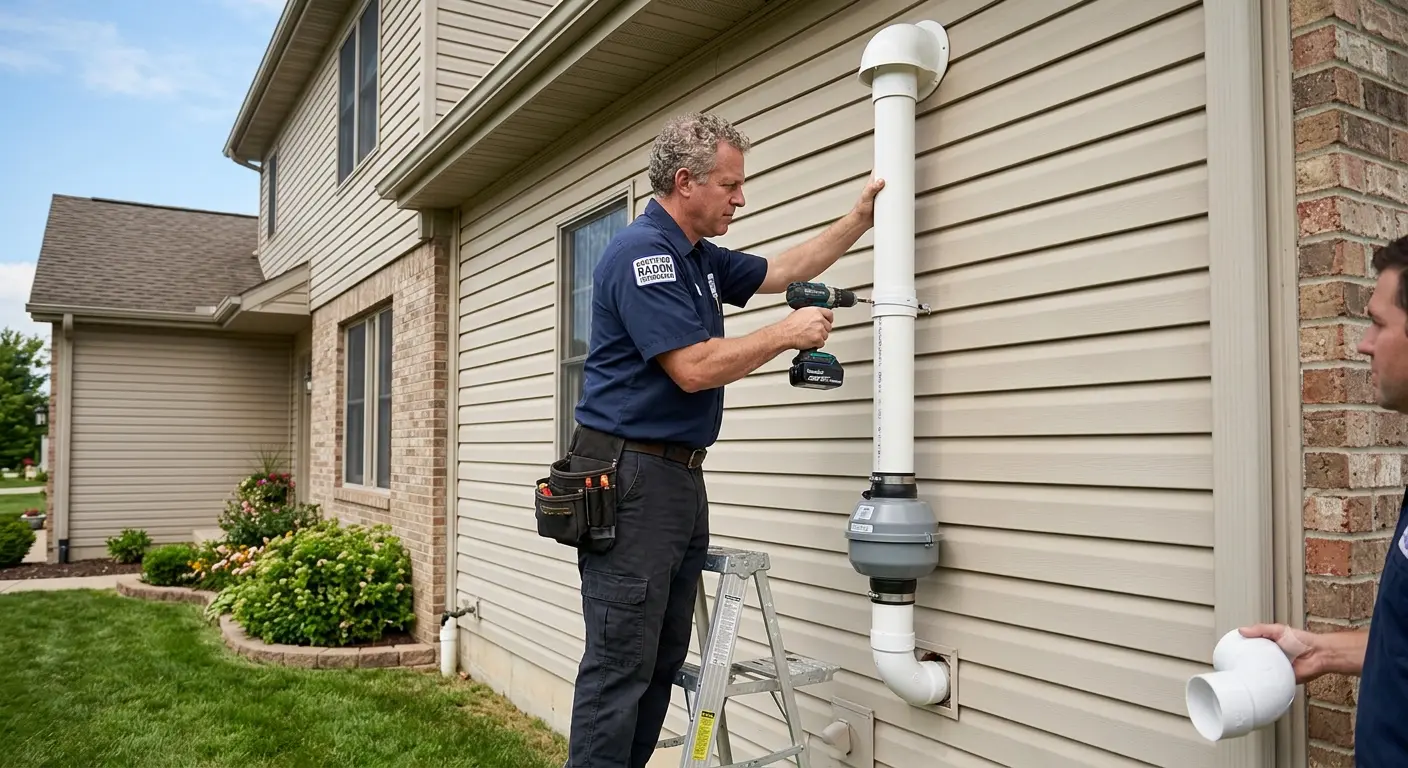
No matter the type, proper venting matters. Building code requires the vent opening to sit more than ten feet above the ground and at least ten feet from any window or door, with the pipe rising vertically to release radon and prevent it from reentering the home. Clean, code-compliant venting is part of every install we do.
Which Radon System Is Right for Your Home?
The answer depends on your foundation, your soil, and how air moves beneath your home — which is exactly why a professional assessment comes first. The radon pros at North American Radon Pros evaluate your property, recommend the right system, install it cleanly, and confirm the results with a follow-up test.
FAQ
What is the most common type of radon mitigation system?
Sub-slab depressurization. It’s the most common and reliable method, using a fan to draw radon from beneath the foundation and vent it outside.
Can my home use more than one system type?
Yes. Some homes — especially those with hollow block walls — combine methods, such as block wall suction paired with sub-slab depressurization, for the best result.
Do all radon systems use a fan?
Most active systems do. Passive systems rely on natural airflow but are less effective, which is why a fan is often added to bring levels down reliably.
How do I know which system my home needs?
A certified professional assesses your foundation type, soil conditions, and radon readings to recommend the right approach. There’s no reliable one-size-fits-all choice.
How effective are these systems?
Most reduce radon by 80–99%, often bringing homes well below the EPA action level of 4.0 pCi/L. A post-installation test confirms the result.